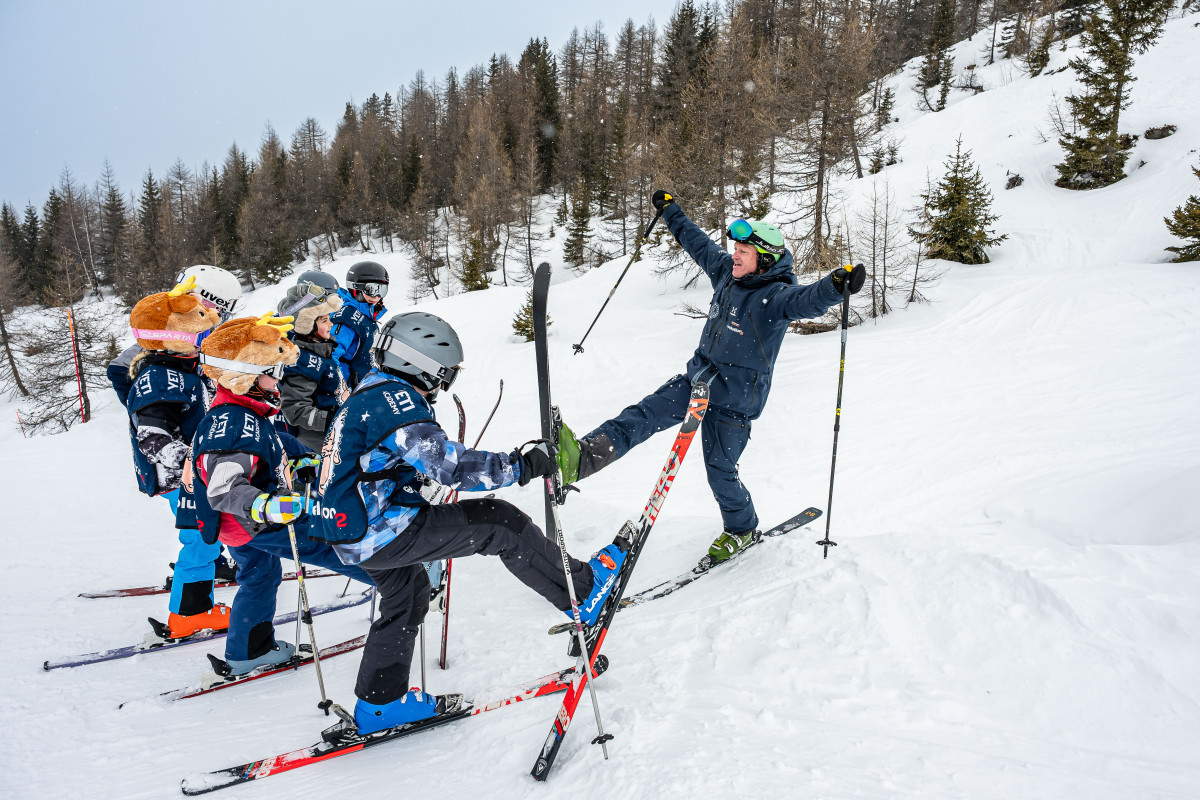
Looking for ski lessons for your child and struggling to choose between several ski schools? Whether you’re considering ESF, Oxygène, ESI or one of the ski schools in the Evolution 2 network, the differences aren’t always obvious at first glance. Yet they can make all the difference: group size, how your child’s ability is assessed, opportunities for progression, and even what they’ll be able to do by the end of their ski programme.

In this article, we’ll explain what makes Evolution 2’s teaching approach different, what age your child can start skiing, how to choose the right level, and why our young skiers leave with so much more than just memories of their first turns!
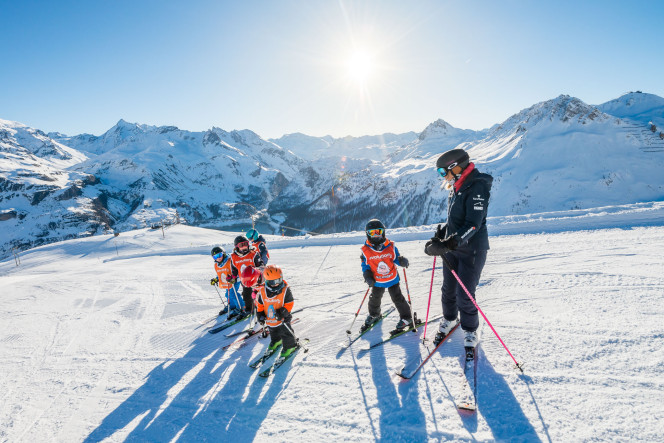
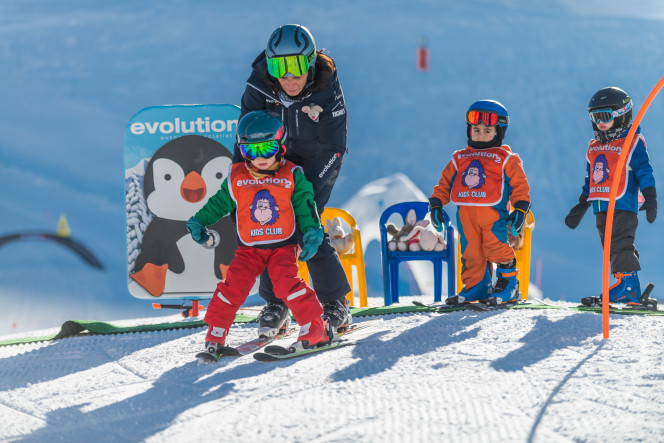
Children’s Group Ski Lessons with Their Instructor in Tignes

A maximum of 8 children per group: personalised attention for every skier

This is the first promise of our children’s group ski lessons: no more than 8 children per group. Why does this matter? It means the instructor gets to know every child by name, understands their skill level, recognises their strengths and is aware of their fears or concerns. Each child also receives personalised feedback and guidance, rather than simply following a group skiing along in a pack.

Waiting times are reduced too: more runs mean more time on skis and faster progress! Smaller groups are easier to supervise safely, both on the slopes and at the ski lifts. For younger children, small groups also help build confidence: a child who feels seen and encouraged is more willing to give things a try.

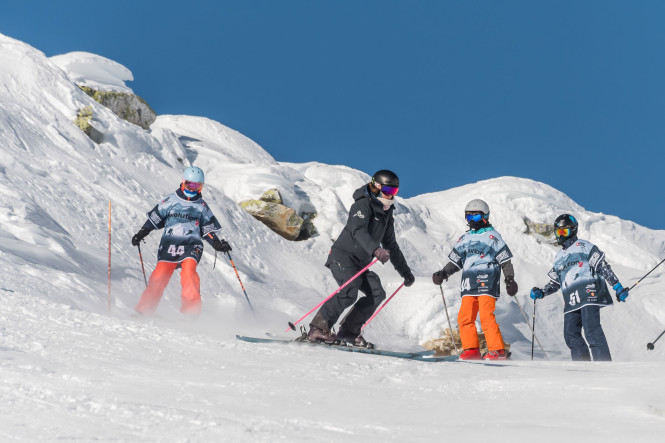
Junior Academy Ski Lessons in Les Arcs with Teenagers

Continuous Assessment: Less Pressure, More Fun

At Evolution 2, we’ve chosen a continuous assessment approach. In practical terms, the instructor monitors each child’s progress throughout the week, session by session, rather than relying entirely on a final test. Here’s what this means for your child:

  • No exam stress: they can focus on improving their skills rather than worrying about “passing a test”.

  • A fairer assessment: children can have an off day or feel intimidated on the day of an exam, neither of which reflects their true ability.

  • Natural progression to the next level: the instructor moves each child up when they feel they’re ready, while recognising and celebrating every new skill they master.

As a result, children feel more relaxed and learn to associate skiing with enjoyment rather than performance.

Children in the Evolution 2 Ski School’s Snow Garden with Their Instructor

A Fun and Playful Approach to Learning to Ski

We learn best when we’re having fun. Our state-certified instructors use a playful teaching approach that combines games, obstacle courses, challenges, real-life scenarios and exploring the mountain terrain. Technical skills such as the snowplough, parallel turns, skidding and carving are developed naturally, without children feeling like they’re “in school”.

A child who laughs while skiing is a child who wants to come back. And that’s what really matters when it comes to helping them become a confident, independent skier who loves the sport for years to come.

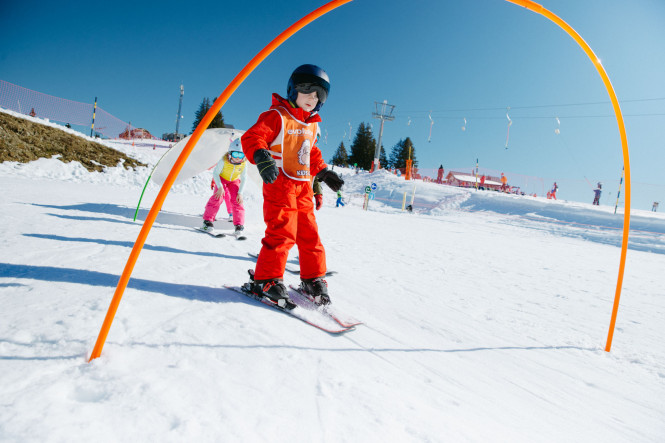
Child in the Evolution 2 Ski School’s Snow Garden in La Clusaz

What Age Can Children Start Skiing?

This is THE question every parent asks. Most children can start discovering skiing from the age of 3 or 4, provided that sessions are short, age-appropriate and, above all, enjoyable. Here’s what really matters:

  • Enthusiasm: a child who can’t wait to put on their skis will make faster progress than one who feels forced into it.

  • Basic independence: being able to walk and move around in ski boots, and feeling comfortable with the idea of being guided by an instructor.

  • The right equipment: a helmet, well-fitting ski boots, warm clothing, and a spare pair of gloves or mittens.

  • Regular breaks: we prioritise the quality of the experience over its duration.

Don’t worry if your child is a little older! It’s never too late to start skiing, whether they’re 6, 8 or 10 years old — or even an adult. Groups are organised by ability level, allowing everyone to progress at their own pace.

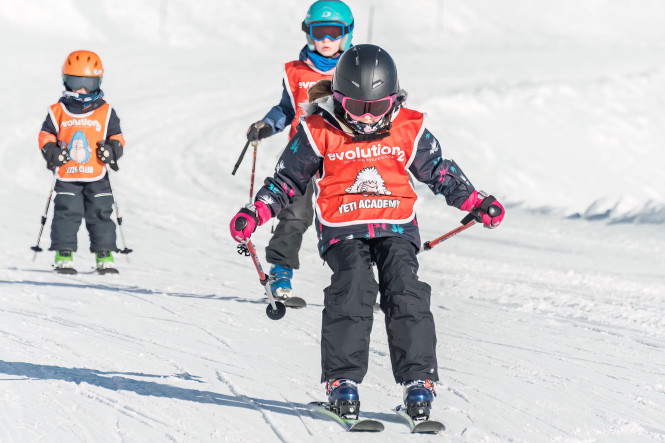
Children Taking Ski Lessons on the Slopes of Tignes with Evolution 2

What Ski Level Should I Choose for My Child?

Our ski levels are designed to ensure that every child is placed in a group with a similar ability level and clear learning objectives. And to help you navigate the different ski schools, we’ve put together a guide to the equivalent levels at ESF, ESI and Oxygène.

For beginners:

  • Yétison: Your child has never skied before. They’ll learn how to put on and take off their skis, get back up after falling, and move around on flat terrain (equivalent to Ourson).

  • Petit Yéti: Your child can climb using the step technique, get back up independently and is beginning to traverse the slope with parallel skis (equivalent to Flocon).

  • Yéti 1: Your child can turn and stop using the snowplough technique and is learning the skating step and how to use ski poles (equivalent to 1ère étoile).

For intermediate skiers:

  • Yéti 2: Your child can link parallel turns on blue runs and has mastered rounded skidded turns (equivalent to 2ème étoile).

  • Yéti 3: Your child skis with parallel skis and can link turns on red runs (equivalent to 3ème étoile).

  • Super Yéti: Your child can ski on red and black runs, is discovering carving and tackling a variety of courses (equivalent to Étoile de Bronze).

Not sure which level is right for your child? Check out our complete guide to all Evolution 2 ski levels and their equivalents.

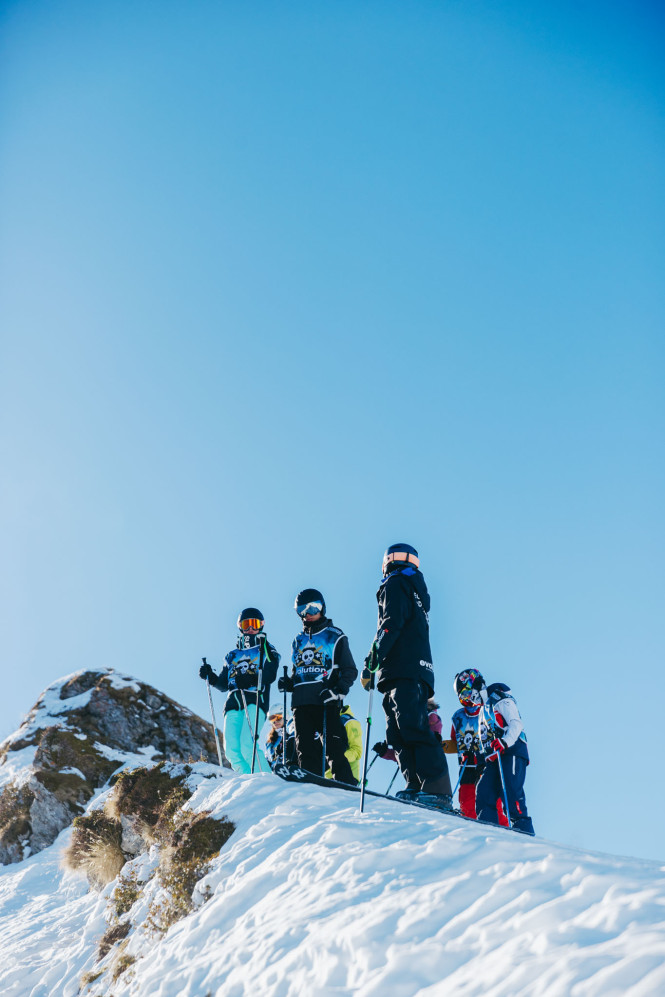
Junior Academy Ski Lessons with Evolution 2 in Avoriaz: Skiers and Instructor

Discover Off-Piste Skiing and Mountain Safety

This is where Evolution 2 really stands out. While many ski programmes focus on mastering groomed slopes and slalom, we take things further. From the Yéti Rider and Junior Academy levels onwards, children discover the world of off-piste skiing and learn the basics of mountain safety. They also refine their technique and get an introduction to freestyle skiing. This gives children new horizons to explore as they progress, helping keep them motivated throughout their teenage years. Learning to read the mountain, understand the risks and use safety equipment such as an avalanche transceiver (DVA) is invaluable for developing into an independent skier. Off-piste skiing is introduced step by step, under the supervision of an instructor, in an environment suited to each child's age and ability level. Over the years, your child learns much more than how to ski down a slope: they learn how to explore the mountains with confidence and safely.

Explore our ski lessons and book now! You can also discover our destinations, learn more about ski levels and their equivalents, and explore our off-piste skiing options for older children.

Book early to secure your child’s place in a group: with a maximum of 8 children per class, places fill up quickly!

Other related articles