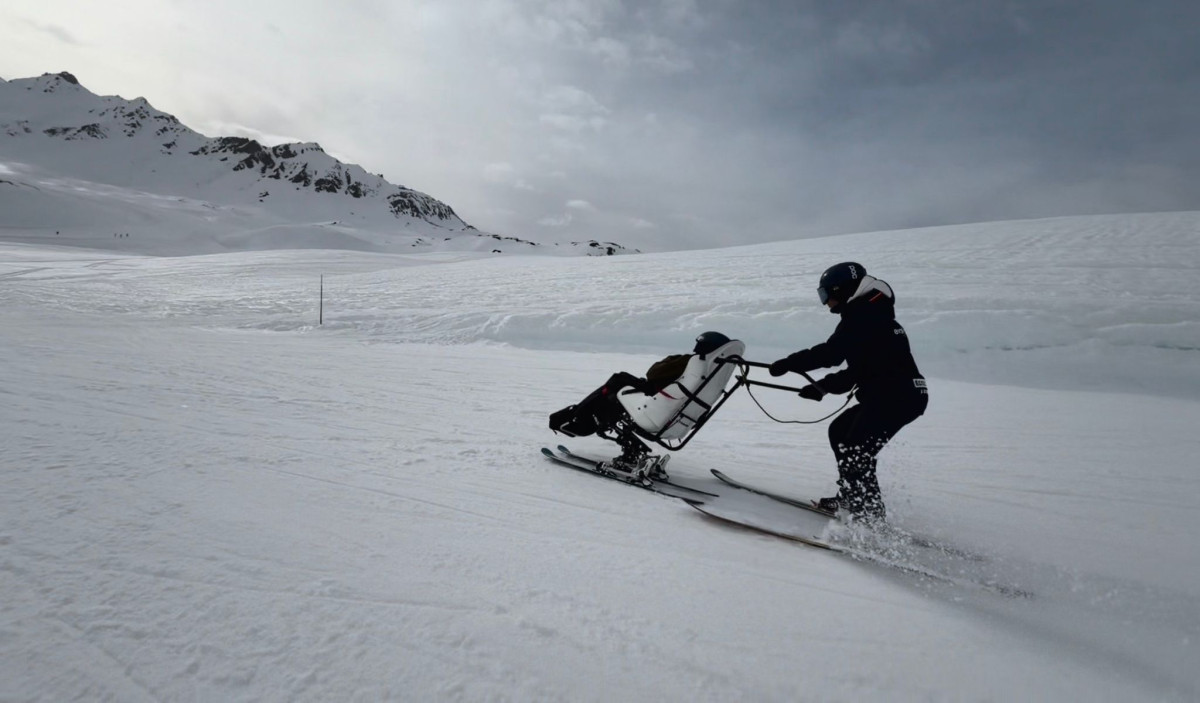
Today, the mountains are becoming a true space for inclusion, where everyone can experience the joy of skiing, regardless of their disability. Thanks to the development of adaptive skiing and accessible winter sports, skiing is becoming increasingly available to people with disabilities. With adapted equipment and specialized support, adaptive skiing allows skiers to enjoy the slopes, share moments with family and friends, and fully explore the ski area.

At the heart of this evolution are passionate instructors committed to making the mountains more inclusive. Hippolyte, a ski instructor at Evolution 2, a network of ski schools, supports people with disabilities in discovering adaptive skiing through equipment such as the dualski, enabling them to safely experience the excitement and freedom of skiing.
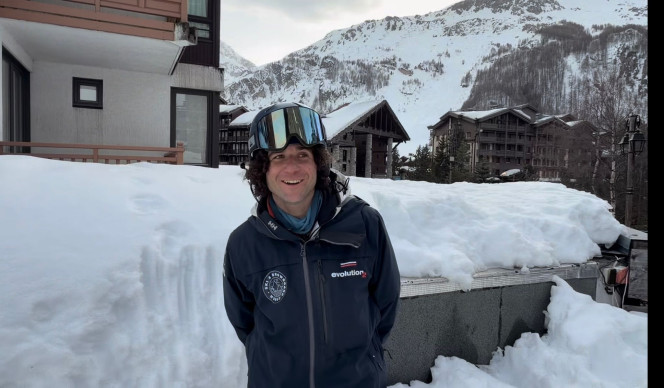
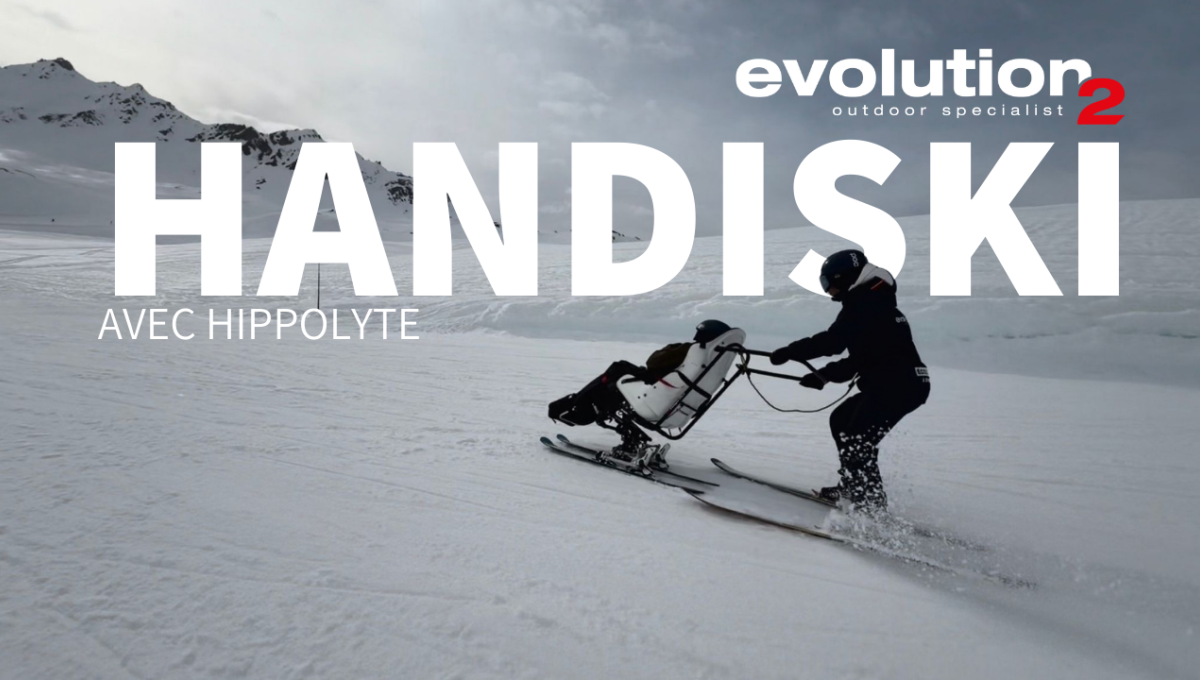
Evolution 2 ski instructor Hippolyte in Val d’Isère.

A dedicated ski instructor

Hippolyte has been a ski instructor for 12 years and has been teaching with Evolution 2 for the past six years. Passionate about the mountains and skiing since childhood, he decided to turn this passion into his profession.

“I got into adaptive skiing because one of my close friends had a serious bike accident and has been using a wheelchair ever since. It’s through him that I discovered this practice.”

Since then, he has regularly accompanied adaptive skiers, with the goal of giving them the same sensations and enjoyment as any other skier on the slopes.

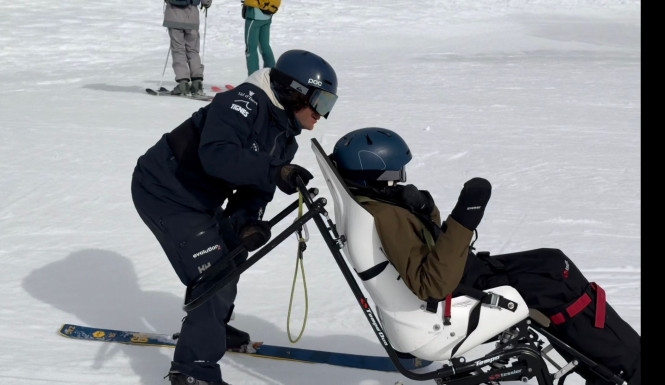
Evolution 2 adaptive ski instructor using a dualski on the slopes of Val d’Isère

Skiing as a tool for inclusion

Beyond athletic performance, leisure activities play an essential role in social inclusion. Skiing allows people to share an activity with others, experience thrilling sensations, and escape into an environment that is different from their everyday surroundings.

“What’s great about adaptive skiing is that the people I take out on the slopes are always very happy. There’s a huge sense of satisfaction for them… and for me as well!”

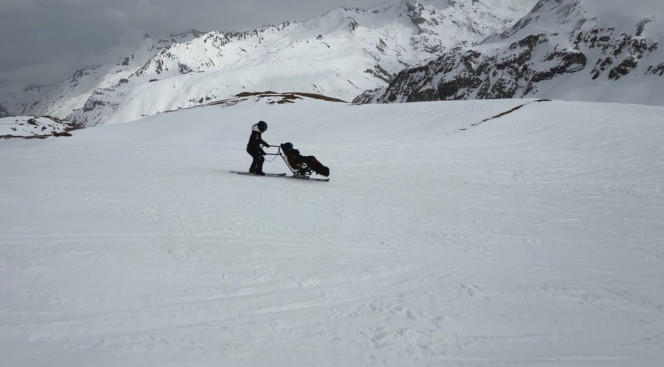
Ski instructor and adaptive skier in a dualski

Adaptive equipment for skiing

“The equipment we use at Evolution 2 is called a dualski. It’s really great: it has a shock absorber and it’s very easy to control. The chair has its own skis, and I ski behind it while steering. There’s also a hydraulic system that lifts the chair so it can be placed on the chairlift, and of course I’m connected to the chair with a safety strap.”

Today, the accessibility of skiing relies on specialized equipment designed to adapt to different types of disabilities. Among these, Hippolyte regularly uses a device called a dualski.

This equipment allows a person with a disability to ski while seated, while the instructor skis behind and guides the chair down the slope.

The dualski includes several key features:

  • a shock absorber to absorb bumps and uneven terrain

  • a lifting system that allows the chair to be placed on chairlifts

  • a safety strap connecting the instructor to the chair

These innovations make it possible for many people with disabilities to enjoy the sensations of skiing in a safe and comfortable way.

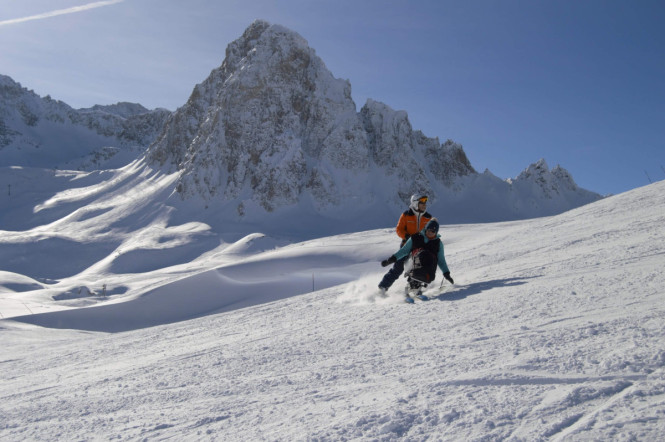
Adaptive skiing in Val d’Isère in a dualski with an Evolution 2 instructor

Breaking barriers on the slopes

Contrary to popular belief, adaptive skiing is not limited to easy slopes. In fact, it can even be very fast.

“People often think that with the chair you can only ski on green slopes, but we can actually go almost anywhere. The sensations are the same, and we can ski on all types of terrain: groomed runs, off-piste, and some even do freestyle!”

Thanks to advances in equipment and the growing accessibility of ski lifts and ski areas, adaptive skiers can now explore almost the entire ski domain, just like any other skier.

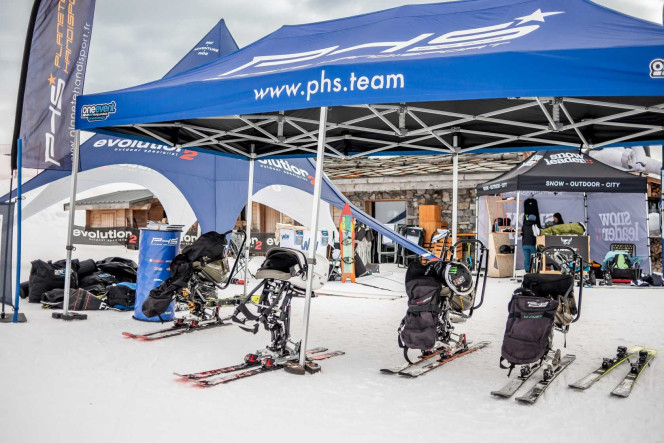
Different sit-skis used for adaptive skiing on the Freeride in Tignes

A variety of adaptive skiing options for all abilities.

Adaptive skiing is not limited to a single practice. Depending on each person’s abilities and needs, several options exist to allow everyone to enjoy skiing.

Some people can ski independently, especially with adapted equipment when they have mobility in their arms. This is the case with the sit-ski (or mono-ski). The skier sits in a seat mounted on a single ski and uses two small stabilizers to maintain balance and steer.

Other forms of adaptive skiing also exist:

  • the dualski, piloted by an instructor who skis behind and guides the chair

  • the gotoski, similar to a snow scooter, particularly suited for people with coordination difficulties

  • guided skiing for visually impaired or blind skiers, where the instructor skis in front and provides directions to guide the skier’s path

For Hippolyte, the message is simple and clear:

“Adaptive skiing is skiing for everyone, with everyone.”

Thanks to technological innovations, the commitment of instructors, and the efforts of ski resorts, winter sports are becoming an increasingly accessible activity for all. And on the slopes, one thing remains universal: the joy of gliding, sharing moments together, and pushing your limits.

Pour visualiser cette vidéo, vous devez au préalable autoriser l'utilisation de cookies relatifs aux statistiques sur notre site.

Paramétrer mes cookies

Other related articles